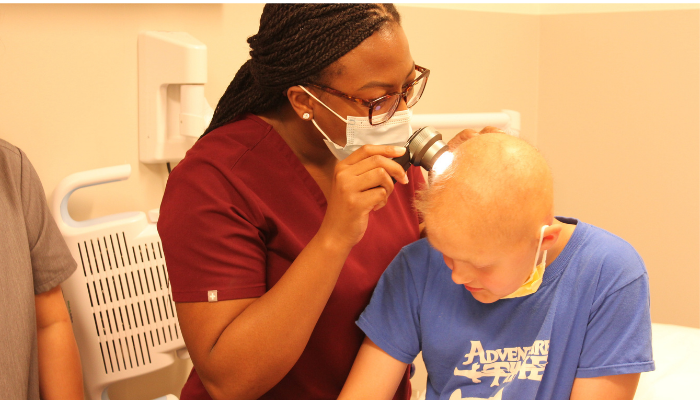
Like many rare disease organizations, the National Foundation for Ectodermal Dysplasias (NFED) stepped up to serve as a catalyst for research that is otherwise likely to be neglected by mainstream science. Now, with more than 40 years of leadership, the NFED is driving the charge to develop effective treatments and—most importantly—cures.


Funding Discovery
Research has been an integral part of our mission from the very beginning. Since the launch of the Research Fund in 1987, we’ve provided more than $1.3 million in direct funding to researchers and contributed $4.8 million to research overall. Research studies have focused on the classification of ectodermal dysplasias as well as several of the 50+ different syndromes, and, when combined with our investment in grants, conferences and salaries, we’ve seen incredible results:
- Brought a potential treatment to human clinical trials for the most common type of ectodermal dysplasia!
- Identified the genes for several ectodermal dysplasias
- Developed treatment protocols for life-threatening skin erosions in the p63 syndromes and eye concerns in incontinentia pigmenti
- Significantly expanded what we know about the ectodermal dysplasias and officially documented it in scientific literature
- Created a new classification system for the ectodermal dysplasias that combines clinical symptoms with genetic pathways.
Community Collaboration
Throughout our decades of research, the power of collaboration can’t be overlooked. Researchers, academics and health professionals from medical and dental communities have continually pooled their resources and expertise to advance knowledge and care of ectodermal dysplasias. From their dedication has come a sense of community, and from partnerships have come innovation. We’ve come together for a range of conferences and gatherings over the years:
- Skin Erosion and Wound Healing in Ankyloblepharon-Ectodermal Defects-Cleft Lip and/or Palate Workshop (2003)
- Access to Oral Health Care For Individuals Affected By Ectodermal Dysplasia Syndromes (2004)
- International Research Symposium on Ankyloblepaharon-Ectodermal Defect-Cleft Lip and/or Palate (AEC) Syndrome (2006)
- International Conference on Ectodermal Dysplasia Classification (2008)
- Ectodermal Dysplasias Classification: A Model for Integrations of Clinical, Systems Biology and Bioinformatics (2012, 2017)
- International Research Symposium on Goltz Syndrome (2013)
- Goltz Research Conference: Growth Arrest in Focal Dermal Hypoplasia (2015)
- International Ectodermal Dysplasias Research Conference: Translating Discovery to Therapy (2021)
- Complex Wounds in Ectodermal Dysplasias Conference (2024)
- Incontinentia Pigmenti Conference: Translating Discovery to Therapy (2025)
Family Leadership
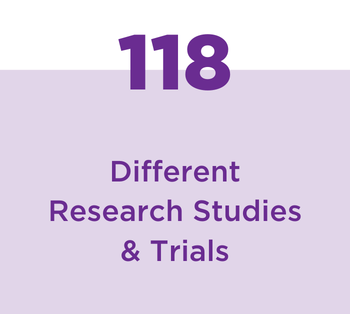
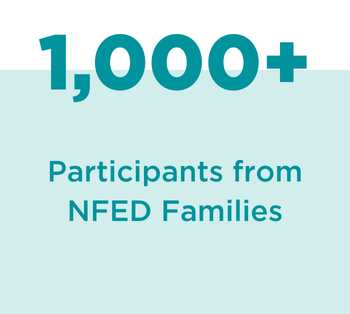
Families and individuals affected by ectodermal dysplasias are at the heart of everything that we do, including research. Without their participation in research studies—sometimes for many years—progress would not be possible.
Without scientific research, there can be no better treatment protocols for this present generation and no potential for a cure for future generations. I simply can’t accept that, knowing that I have the ability to positively affect the future by participating in research.
Virginia, AEC research volunteer
Peter and Beth’s XLHED Story
Creating a Brighter Future
Shaping Our Future: Fund Vital Research!
The NFED has been the sole force in the world to blaze this trail toward better treatments. Despite the long history of ectodermal dysplasias, research focus and expansion has only taken place in the last four decades. We are proud of the extraordinary successes we have achieved in a relatively short amount of time and with a small amount of money.
Lives have been saved. Treatments have been developed. Hope has been given. Now is the time to invest in leading edge research that results in longer, healthier and happier lives.
Donate to Develop Cures