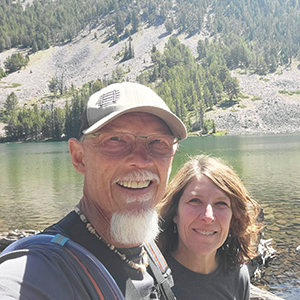
By Kurtis
Growing up on a dairy farm in rural Wisconsin with hypohidrotic ectodermal dysplasia (HED) was both challenging and unique. During the 1970s and 1980s, there was very little awareness of HED. People knew I was different because I had thin hair, pointed teeth, and limitations in the heat, but few understood why. Looking back, I continue to be amazed by how naturally some people embrace differences while others struggle to understand them.
The Strength of Family Support
One of my greatest blessings was growing up in a supportive family. I also had an older brother and a cousin who had HED, which gave me an instant sense of community. Having family members who shared similar experiences made a tremendous difference. Without them, growing up with a rare condition during that time would have been much more isolating.
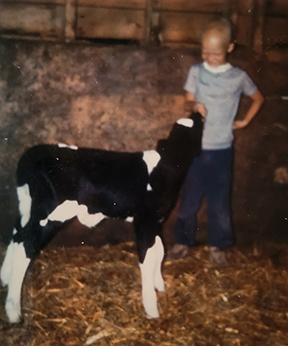
My parents expected the same things from all of us, and that helped create a sense of normalcy. At the same time, they understood when I needed accommodations because of HED, whether it was taking a break from haying to cool off with a freshly soaked shirt, enjoying a ride on the motorcycle to catch a breeze, lying on the cool concrete floor of the barn between loads of hay, or taking a quick dip in the cattle water tank to lower my body temperature, they allowed me to listen to my body while still encouraging me to participate fully in family life. (For those unfamiliar with farm life, you may want to look up what a “cow tank” is!)
Finding a Purpose Beyond the Farm
Although I loved growing up in a rural farming community—and still do—I realized that farming would be a difficult career given the challenges of HED. Instead, I pursued a degree in education. While working my way through college, I accepted jobs supporting at-risk youth and individuals with disabilities. What seemed like an ordinary career decision ultimately led to 35 rewarding years of helping others.
Lessons Learned from Living with HED
Living with HED gave me a unique perspective. It helped me better understand the obstacles many people face while also reminding me how fortunate I have been. Every day, I witnessed individuals overcoming extraordinary challenges to live independently, pursue meaningful careers, and participate in their communities. Their determination was inspiring and reinforced the importance of empathy, inclusion, and opportunity.
Discovering the NFED Community
Today, several of my nieces and nephews are also affected by HED. It has been encouraging to see the incredible work the National Foundation for Ectodermal Dysplasias (NFED) is doing through advocacy, research, medical support, education, and outreach. My parents passed away before I learned about the NFED, and I often think about how valuable that community would have been for them—and for my family. Like many families living with a rare condition, I’m sure they experienced moments of isolation. Having a network of support can make an immeasurable difference.
Looking Back with Gratitude
While HED has certainly shaped my life, it has never defined it. I am deeply grateful for the love and encouragement of my family, friends, coworkers, and community, who have supported me throughout my journey. Living with HED has taught me resilience, compassion, and gratitude. It has helped make me the person I am today, and I hope others living with HED can find the same strength, support, and sense of possibility in their own journeys.
Kurtis is a guest blogger for the NFED who is affected by HED. He lives in Montana with his wife.
Have a question or comment?