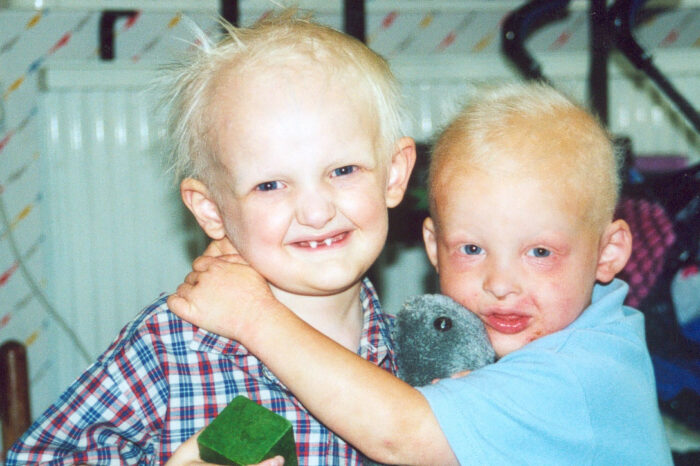
In 1979, a mother named Mary Kaye Richter got some scary news. Her toddler, Charley, had been diagnosed with hypohidrotic ectodermal dysplasia. She had questions and almost no one to turn to.
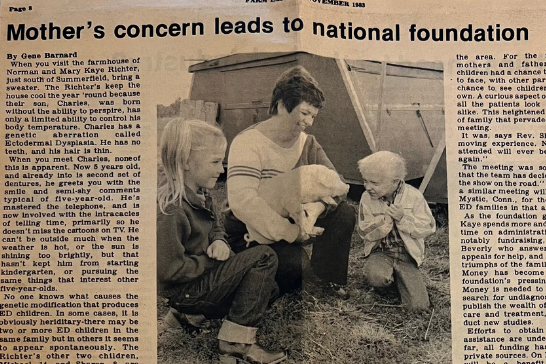
So she did something amazing. She found 12 other families who understood what she was going through, and together they started something that would change lives around the world. On Dec. 24, 1981, the National Foundation for Ectodermal Dysplasias (NFED) was born.
Forty-five years later, the NFED family has grown to more than 11,100 people in 121 countries all over the globe. Here’s a look at how far we’ve come, together. Capturing NFED’s impact requires a book, not a blog! Let’s take a peak at just a few of the innumerable high points.
See 45 Accomplishments in 45 Years
Building Something From Nothing

In those early days, there was almost no information out there for families like yours. The NFED changed that fast. Mary Kaye typed a family letter to keep everyone informed and connected about what she was learning. By 1986, it had grown into a real newsletter called “The EDucator.” It went out to 340 homes in 43 states and eight countries that year.
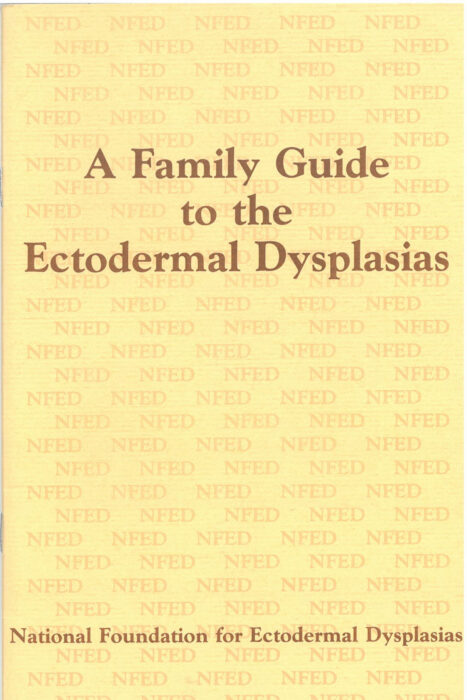
The NFED also published “A Family Guide to the Ectodermal Dysplasias,” giving families something real to hand to their doctors, dentists and teachers. For the first time, they didn’t have to explain everything from scratch.

That same year, something unexpected happened. Singer Barry Manilow donated $1,000 to start the NFED’s Treatment Assistance Program to help kids get dentures. He even let the NFED use his famous lyric, “Can’t smile without you” as its slogan. That felt just right.
Growing a Community
By 1993, the NFED was serving families in 20 countries. In 1995, the NFED launched its first website — and everything exploded. Families who had felt completely alone suddenly found each other. Just five years later, the number of families had doubled!
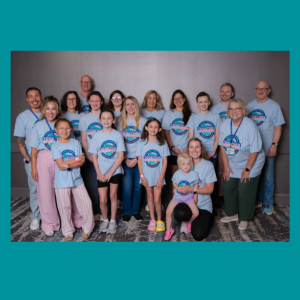
Family Conferences had become, and still are, a beloved tradition. In 2000, the conference even crossed the ocean, heading to England. In 2009, a record to date of 351 people showed up in Williamsburg, Virginia. These gatherings weren’t just meetings. They were homecomings. This year will be the same. We invite you to join us in St. Louis for our Family Conference where we will celebrate 45 years and have a big birthday party! (Register by April 28 before the registration fees increase!)
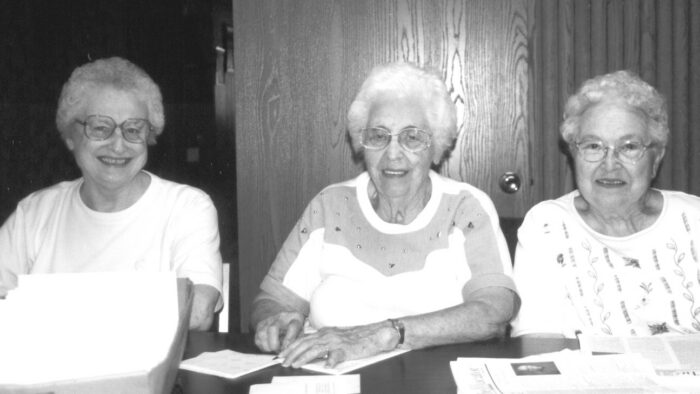
Volunteers powered so much of this work. By 1994, 110 people were regularly giving their time to help the NFED serve families like yours.
Fighting for Better Care
The NFED has always believed you deserve access to good medical and dental care and has fought hard to make that happen.

In 1995, the NFED opened its first Dental Treatment Center at Southern Illinois University School of Dental Medicine. It was the first center of what is now 20+ centers where individuals with ectodermal dysplasias could get the specialized care and dental implants they needed.

In 2017, 175 people marched up to Capitol Hill for the NFED’s first Advocacy Day. They talked to lawmakers about why people with ectodermal dysplasias need health insurance coverage for their medically necessary dental care. That push led to the Ensuring Lasting Smiles Act (ELSA), a bill that would close an unfair insurance loophole if passed. In 2022, the U.S. House passed ELSA with a big 310 votes. The bill is not yet a law, but the NFED isn’t giving up.
Pushing Science Forward
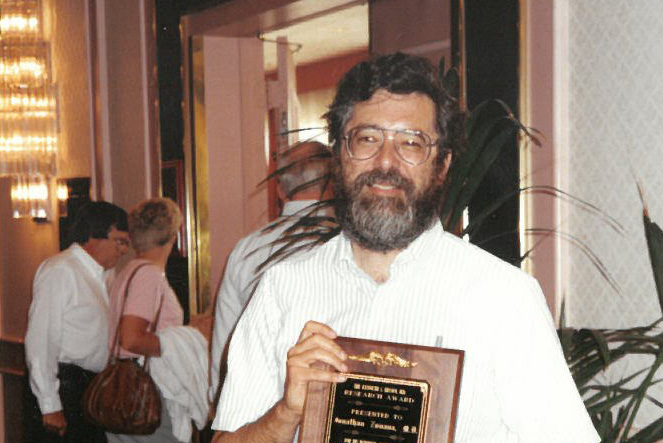
From early on, the NFED put research front and center. In 1989, it gave its first research grant — $10,000 to a scientist to identify the gene causing x-linked hypohidrotic ectodermal dysplasia (XLHED).
That early investment paid off. By 1996, scientists had identified the EDA gene. That discovery made it possible for families to better understand their own risks and it would be the first of several NFED-funded projects that would identify genes.
The research kept coming. The NFED has hosted 11 landmark scientific conferences, including the recent Complex Wounds in Ectodermal Dysplasias Conference and the Incontinentia Pigmenti Conference, launched the Ectodermal Dysplasias International Registry, and supported two clinical trials. In 2016, early data showed that three babies born with XLHED developed normal sweat glands after receiving treatment before birth. That was a huge moment of hope and still is with the Edelife Clinical Trial underway.
In 2024, the NFED published the largest-ever study on how common different types of ectodermal dysplasias are. Knowledge about prevalence helps doctors, researchers and policymakers take these conditions seriously. Our experts spent more than a decade creating a new classification system to help diagnose the complicated question of what is and and is not an ectodermal dysplasia. The new system does not just rely on symptoms but also on genetics.
45 Years of NFED and Still Going Strong
Mary Kaye led the NFED for 30 years before retiring in 2010. Mary Fete carried the torch for 11 years. Now Greg Klimovitz leads the organization into its next chapter.
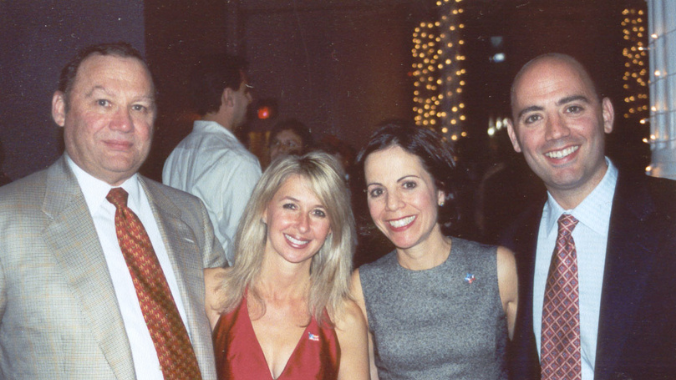
One more milestone worth celebrating: The Geismar family, who started the Halloween Bash back in 2001 in honor of their son, Ryan, held their 25th event last fall. Together, their committee has raised $4.8 million for NFED programs. That kind of love and commitment says everything about this community. They are one of hundreds of families who have fundraised to support the mission.
Forty-five years ago, Mary Kaye Richter believed that no family should face ectodermal dysplasias alone. Today, we’re 11,100+ strong and proving her right.
Here’s to 45 more years, and to all of you who make this community what it is.
Learn About 45 NFED Accomplishments
Have a question or comment? Contact us.