We hear the stories often.
Two parents are given a diagnosis of ectodermal dysplasia by their doctor. They head home and before they pull into their driveway they have Googled the term they can barely pronounce. Immediately the National Foundation for Ectodermal Dysplasias (NFED) pops up as the top hit.
Ok. Maybe number two behind a .gov site, which are close to impossible to surpass.
They scroll through the site looking for answers to their range of questions. They want to know all the things that can make them best equipped to care for their child.
That’s because, as one mom shared with me, “The unknown is what’s scariest. Because when you know things you can do things.”
And being able to do something in the midst of fear is called empowerment. It’s also hope.
For 45 years, the NFED has prided itself in being the world leader in ectodermal dysplasias information and connection. We have also made sure the information is accessible through the use of whatever platforms or means of communication that are at our disposal and aligned with our mission and values.
How We Embraced Technology
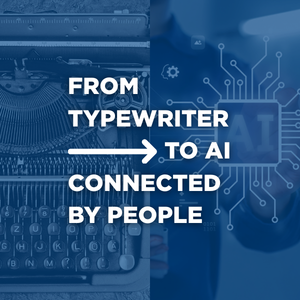
In the 1980s, we mass produced The EDucator, a monthly print newsletter mailed to our families, that provided stories, articles, and images that helped them feel seen. NFED Founder Mary K. Richter typed them on her typewriter and made copies on a copier and then later, used a commercial printer.

The first NFED computer was purchased in 1985. It was a game-changer in the ability to create meaningful content. It also took up an entire desk.
All NFED mailings used to be folded by hand and stuffed into envelopes. One staff member remembers getting the first folding machine, convincing our founder this would make the distribution of information more efficient and free the staff up to make more human connections.
Email showed up in the mid 1990s and families could send us questions without making a costly, long distance phone call.
We launched our first website in 1996 to help families around the world find the Foundation and accurate information. Just five years later, our membership had doubled.
Finding New Ways to Connect

Facebook. Yes, we were onboard with responsible use of this new thing called social media. That is, if it was indeed going to help us with human connections and build an online community within a rapidly growing foundation that expanded not only across the nation, but also the world. YouTube became a way to promote stories and education through video.
MailChimp and Raiser’s Edge allowed us to send out emails with greater efficiency, creativity, and the ability to track engagement so we could customize what we send and to those who most needed the information.
In February of this year, we launched our TikTok channel, exploring how we can continue to enter into spaces where our families already spend their time.
All of this is not because we love technology. We explore these opportunities because we are committed to using whatever means we can to get comprehensive information and answers to our community. And to do so in a way that is in alignment with our mission and our core value as an organization, to foster a culture that places people first.
How the NFED is Engaging AI
And now the question before us at the NFED is, what do we do with AI?
As information is more accessible at a faster and faster rate, we recognize the mixed bag of complexities, hazards, ethical and ecological concerns, and incredible opportunities. We have convened an AI Advisory Team within the last year, a hybrid of NFED members, experts in the field, and members of our Board of Directors and staff. We meet regularly to stay informed and aware.
We even recently approved an AI Policy for our staff, which is likely already outdated even though only a few weeks old. We will review this policy quarterly.
Members of the AI Advisory Team are training the staff. I even had the opportunity in the last year to speak to peer organizations like the National Health Council and others on our approach so we can help others with their own, believing in the collaborative nature of the rare disease community.
I love this quote one of our advisory team members recently shared with me:
AI is not about creating art so you can do the laundry. AI is about outsourcing the laundry to technology so you can create art. – Joanna Maciejewska
And what is this art? Human connection. Like the collating machine, we are looking for ways to free up more time so we can focus on the art of serving our people.
We Are and Will Always Value People First
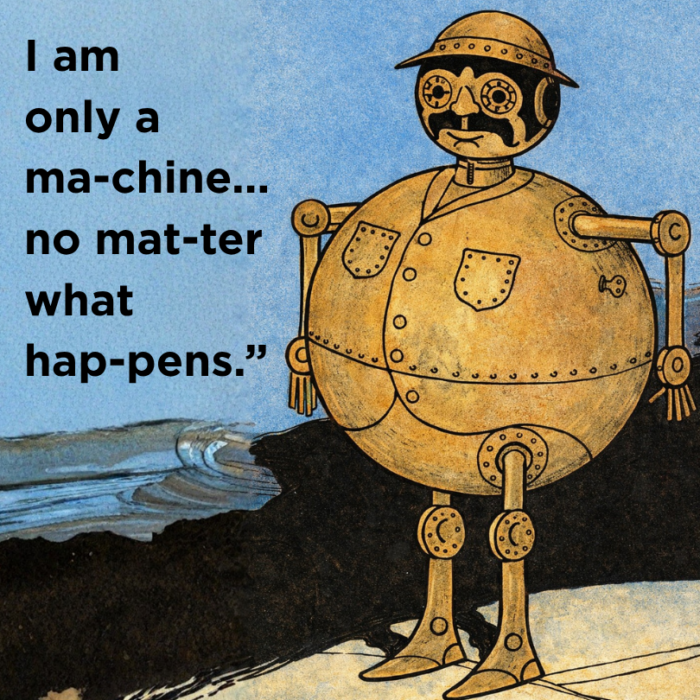
One of my recent indulgences is the original Wizard of Oz series by L. Frank Baum. My favorite character – Tik Tok. Yes, the first robot featured in children’s literature is where the social media platform found inspiration for the name.
Tik Tok was a stocky copper machine that spoke in fragmented discourse and was operated by a turnkey. Only when wound-up could he act. And depending upon who was operating him, he would respond accordingly. Sometimes for good. Sometimes for ill.
He warned Dorothy upon meeting her, “As for that,” answered Tiktok, “I am only a ma-chine, and can-not feel sor-row or joy, no mat-ter what hap-pens.”
The same is true for AI. No matter how beneficial, no matter how efficient, no matter how accurate or creative, AI cannot feel sorrow or joy.
But your NFED community, which includes the staff and more than 11,100 members can. That’s what makes us beautiful and beloved. It has for 45 years and will for another.
Nevertheless, as our community grows alongside new developments in technology and how information is accessed, we are here for you and learning alongside you. We remain committed to our people-first value. Always.
We also want to help you find the answers you are looking for, answers to the questions that may leave you uncertain and afraid. Because when you know things, you can do things.
Like the tools of the past, which were once met with reasonable suspicion and wise caution, we believe elements of Ai can help.
5 Things to Know If You Use AI
In the spirit of how we like to communicate at the NFED, here are 5 things to remember if and when you do use AI in your ectodermal dysplasia journey.
- Exercise caution. Get second opinions. AI isn’t a search engine. It generates answers, which means it can mix fact with inference and sound confident either way. When you use it, try adding this to your prompt: “Clearly identify what is fact versus inference, and cite your sources.” That one line will get you a much more honest answer. And leverage multiple (AI) platforms to compare the outputs.
- Be safe and secure. Refrain from using too much personal information. Assume anything you insert in AI is being made public on a website. It actually may be.
- AI is not your doctor, dentist, therapist, or other care provider. Trust the experts who are not only trained for their profession, but also are equipped to use AI in the field and have your best interest in mind. Go to appointments prepared, but also prioritize your human care team to help you sort what is accurate and relevant.
- Consult with the NFED. Call us. Email us. Message us. We want to help you. Run the information you discover by your NFED community. We even have a Patient Care Council and Scientific Advisory Council we refer questions to quite frequently. By talking with us, you can also help us improve and update the information we provide.
- People first. There is nothing more hopeful than real human connection. And the NFED community does that quite well. It’s actually our artform! Insert shameless plug to attend this summer’s Family Conference in St. Louis 🙂
Have a question or comment? Contact us.