The National Foundation for Ectodermal Dysplasias (NFED) is committed to what matters most to families: research that leads to real answers and better care. At the end of last year, the NFED proudly funded two research projects. Each project received a $25,000 grant.
New Technology to Repair and Regenerate Bone in Children with Ectodermal Dysplasia
One of the grants went to Brad Amendt, Ph.D. at the University of Iowa. His research looks at a new way to protect and strengthen alveolar bone so dental implants may work better for people affected by ectodermal dysplasias. This is a brand-new research area for the NFED and an exciting step forward. Stronger bone could mean better dental options and more confidence for patients in the future. Read below to learn more.
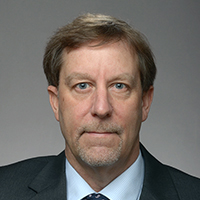
By Brad Amendt, Ph.D.
What if your child, or adult family member could receive life-changing treatments for oral health care without expensive surgeries, drugs, and materials? Would you like a noninvasive, low-cost, effective method to rapidly regrow bone in your mouth to support, repair and enhance bone growth, support teeth or dental implants without costly bone grafting?
Bone grafting and radical surgical procedures inflict pain and discomfort in both the oral cavity and the secondary site where the bone was obtained. These invasive procedures are not always successful and can take months to repair bone. These are very expensive and painful procedures.
The high cost associated with current synthetic bone-graft therapy and the reported adverse events strongly underscore the need to develop an alternative approach that is safer, more cost-effective, and highly efficient for bone regeneration.
A New Approach
We have developed a new molecule (drug), that is less-costly, more efficient and effective, without major surgery to regrow and regenerate new bone in the mouth (alveolar bone). This new procedure provides a larger, denser, and more stable platform for bone regeneration, without invasive bone grafts. It is easy to use and rapidly forms new bone to support existing teeth or for dental implants.
How It Works
An individual is screened for the appropriate treatment. Treatment can be performed in a dental clinic or surgical clinic by making a single incision along the alveolar ridge (on top of the gum line) where a small collagen sponge is inserted, and the drug is added to the sponge.
The incision is sutured (closed) and can be covered with a mouth guard to protect the site (for a small child), or left uncovered for an adult, who is instructed not to chew on the sutured site. The drug also inhibits inflammation and promotes healthy gingival growth. New bone will form connected to the original bone and increase in height and width. It is an easy procedure.
Even if an individual has a genetic or disease anomaly, the drug will still instruct the existing tissue and bone to make new bone, it works for everyone. This is especially important for people with ectodermal dysplasia as the genetic cause may be known or unknown.
The generous funding from the NFED will allow us to refine our treatments, using our Plasmid-based microRNA Inhibitor System (PMIS-miR-200a, our DRUG). The FDA has tentatively approved our new DNA sequence and redesigned drug, which we will test in rabbit models with critical sized jaw defects for bone regeneration and tissue healing. The conclusion of these tests will allow us to move forward to obtain full FDA approval for use in humans.
This is a game changing procedure and because it is difficult to obtain National Institutes of Health funding (government funding) for new innovative treatments, the funds from NFED will aid in making this new treatment possible. There are no adverse side effects, no pain, and no toxicity. Bone is regenerated rapidly, usually in six weeks.
Antisense Oligonucleotide–Based Therapeutic Strategies for AEC Syndrome
The second grant went to Professor Caterina Missero at CEINGE, Center of Genetic Engineering, and University Federico II in Italy. She is a familiar and trusted researcher in the ectodermal dysplasias community. She has been studying the painful skin erosions in ankyloblepharon-ectodermal defects-cleft lip and/or palate (AEC) syndrome for more than 20 years.
This latest award is the fifth grant NFED has awarded Prof. Missero for her ongoing research. Her goal has stayed the same: to understand why the skin is so fragile and to find real solutions. She recently shared updates showing how the project is laying the foundation for a treatment that could reduce skin breakdown and improve daily life for those affected.

By Caterina Missero
AEC syndrome is a rare inherited condition that causes fragile skin, painful erosions, and additional features that can severely affect daily life, especially in early childhood. The disorder is caused by changes in a gene called p63, which normally plays a central role in maintaining healthy skin. In AEC syndrome, the altered p63 protein does not behave properly inside skin cells, weakening the tissue and making it prone to injury.
Our recent studies suggest that skin cells can be encouraged to produce a shorter, more stable form of the p63 protein that supports skin integrity and avoids the harmful behavior seen in AEC. This can be achieved by subtly changing how the p63 gene message is processed by the cell, without permanently altering the gene itself. Importantly, this approach allows cells to restore key functions needed for skin strength and repair.
In this project, we will explore a potential therapeutic strategy based on small synthetic molecules called antisense oligonucleotides (ASOs). These molecules are designed to guide cells toward producing the healthier form of the p63 protein. ASO-based medicines are already in clinical use for other genetic conditions, making this approach particularly attractive from a safety and translational perspective.
Our Goals
The project has two main objectives.
First, we will evaluate how effectively ASOs improve p63 function and skin cell resilience in human skin cell models carrying AEC-associated gene changes. This will allow us to identify the most promising ASO candidates.
Second, we will study how ASOs can be delivered to fragile skin in a gentle and controlled manner. Because the skin barrier is altered in AEC, understanding how these molecules enter and persist in the skin is essential for future therapeutic development.
The long-term aim of this work is to lay the groundwork for a safe, reversible, skin-applied treatment that could reduce skin fragility and improve healing in individuals with AEC syndrome. By generating foundational data, this project will support future steps toward clinical translation without committing to permanent genetic interventions.
Research is a Marathon
Research like this does not happen overnight. It takes time, trust, and steady support. The NFED proudly stands with researchers like Professors Amendt and Missero, who are committed for the long haul and with families who are waiting for answers.
Every grant funded brings hope. Every study moves science forward.
Learn about the significant impact the NFED has had on XLHED research.
Have a question or comment? Contact us.