
Hello NFED family!
We want to share some updates from the road. Recently, your Executive Director and Director of Research traveled to Alexandria, Virginia to attend the annual conference of the Pediatric Dermatology Research Alliance (PeDRA).
We know that when your child is overheating on the playground, when you are fighting insurance for dental or medical care, or when you are simply tired of waiting, reading another blog about NFED presence at a research conference without tangible results on real progress can be frustrating. We hear you, and we share your urgency for real solutions.
And yet, that’s exactly why we keep showing up to sit in the same room with some of the brightest minds in the field of pediatric dermatology. We are committed to seeing the day when a true breakthrough really comes and a treatment is finally approved.
This commitment is what drives us for clinical trials like Edelife, hosting Wound Healing Conferences for p63-related syndromes, and working tirelessly with the professional community we meet at these gatherings, some who even join our Scientific Advisory Council.
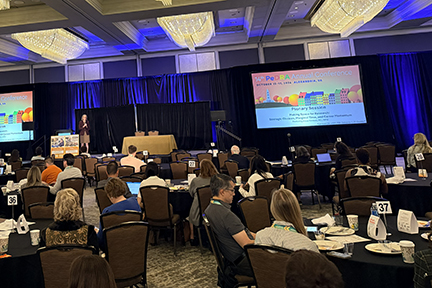
We also attend these gatherings to keep our ears to the ground, listening for any inklings of hope or progress, potential collaborations that can shape what’s next for us at the NFED related to research.
Here is what we learned, what we are working on, and why we feel more hopeful than ever.
The Immense Need for Our Voice

There was one major takeaway from our time in Virginia. There is an immense, urgent need for more research dedicated specifically to ectodermal dysplasias.
While it can feel tough to hear that our rare conditions aren’t dominating the main stage yet, it actually gave us a renewed sense of purpose. It proved exactly why we needed to be there. Doctors cannot study what they do not see.
By being present in the exhibit halls and hallways, we reminded every attendee that our families are here, they are waiting, and they deserve answers. The lack of current research isn’t a dead end. Instead, it is an open invitation for us to lead the way and spark new interest, which the NFED has done successfully for decades.
Talented, Kind, and Nurturing Doctors
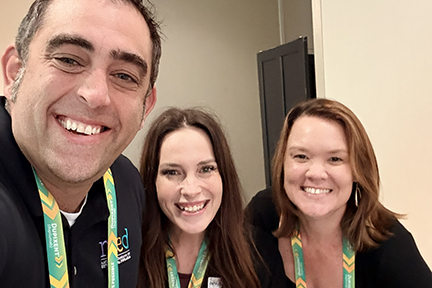
The doctors and scientists who attended PeDRA are some of the most talented medical minds in the world. But what stood out to us even more than their intelligence was their incredible kindness. Pediatric dermatologists are a uniquely warm and supportive group of professionals. They treat each other like a close-knit community, always lifting each other up and cheering on new discoveries. These are the same principles that make the NFED a powerhouse!
We noticed that there can sometimes be a wide distinction between the medical doctors who do the science and the advocates who represent patient families. Our goal at the NFED is to completely bridge that gap. We want to make sure these brilliant doctors do not just look at cells under a microscope, but truly understand the daily lives of the people behind the data. The Foundation works hard to build a bridge where doctors and families work side-by-side as equal partners.
Inspiring the Next Generation of Research Partners
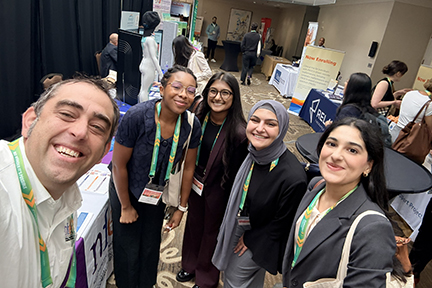
One of the most joyful parts of the conference was interacting with young medical students and research fellows. These are the doctors of tomorrow, and they were incredibly eager to learn about the NFED.
We had a fantastic time chatting with students from Northwestern University. Some of them had just participated in our recent Wound Healing Conference in Chicago! They absolutely raved about their experience meeting our families. They told us how deeply inspired they were by hearing real stories from real people. The students explained that the true magic of research happens when the individuals who need the outcomes are actively involved.
The NFED is ready to nurture the young researchers’ and clinicians’ passion. They want to know how a condition affects a child’s happiness, school days, and family life. Sadly, we learned during a keynote speech by Dr. Alexa Kimball from Harvard University that as these young doctors advance in their careers, they are often pushed away from studying quality of life-related topics in favor of other fundable research areas outside of ectodermal dysplasias.
The NFED wants to change that. By keeping these young, enthusiastic medical students connected to the NFED pipeline, we can support them so they continue to focus on the things that matter most to our families.
Finding Overlaps with Other Skin Conditions
Even though there were few sessions dedicated entirely to ectodermal dysplasias, we found great value in listening to talks about other pediatric skin disorders. Many rare skin conditions face the exact same challenges we do. They struggle with getting an early and accurate diagnosis, finding proper assessments, and dealing with approved treatment options. Rather than using evidence-based knowledge from controlled studies, many fields must use expert groups called Delphi consensus panels to derive their medical care guidelines.
There is much potential for advancing treatments for our families when the NFED can learn from collaborating on these common issues across all pediatric skin conditions. We are certainly stronger when we stand together! We can learn an immense amount from the work being done in those fields.
For example, the NFED can use their methods to help shape our own efforts for research guidelines for p63-related conditions. By studying how other organizations successfully fought for treatments, we can copy their blueprints and accelerate our timeline toward finding cures.
What is the Ectodermal Dysplasias Registry?
There is a major ectodermal dysplasias research project you can be involved in. In August, the NFED launched the Ectodermal Dysplasias Registry. This is different from simply registering with the NFED to get mailings. It’s a natural history study.
This Registry is a safe and secure place to share your experiences living with ectodermal dysplasias. By joining the Registry and entering your medical history and health information, you can help researchers and doctors understand the condition better. The Registry gives researchers the data they need to study the condition more deeply and find answers that can lead to new discoveries. It’s officially open, and we want you to be part of it! Join the Registry.
“Will there ever be a treatment?”
It is a question we hear often from families in our NFED community. It was on our minds, too, when we were in Alexandria. Today, there is still no FDA-approved therapy for ectodermal dysplasias. But during the same week we were at PeDRA, the U.S. Food and Drug Administration announced its new Rare Disease Framework Initiative.
It gives us real hope.
An estimated 14.5 in every 100,000 births are affected by ectodermal dysplasias, across about 50 types. Traditional research and approval models were never built for communities as small as ours. A review process designed with small patient populations in mind could help clear the path toward that first approved therapy.
The initiative was a major topic of conversation again a few weeks later at the NORD Summit, where Greg joined rare disease leaders from across the country. Progress in rare disease policy is often slow. But it is real, and it builds on the persistence of patients, caregivers, researchers, and partners who keep showing up.
That is why the NFED shows up too, in exhibit halls, at summits, and anywhere decisions about rare disease research are being made. We go so that you do not have to carry this work alone.
This is what Greg shared on his LinkedIn when the news broke.
“I am hopeful. Not because the road ahead is easy, but because I see this as a win. And when advocating for our community, you take the wins whenever you can.”
Big Wins and Strategic Future Plans

We had a wonderful meeting with the leaders of PeDRA and officially secured a spot to be featured on their professional medical podcast. This interview will air during Ectodermal Dysplasias Awareness Month in February. It is a massive win because it allows us to speak directly to thousands of pediatric dermatologists right on their headphones, educating them about our families and our mission.
Looking Ahead
We left Alexandria with an even greater understanding that our work is moving in the right direction. True knowledge takes time, and the bravery of our families to share their lives and participate in research humbles us every single day. You are the real champions and heroes leading the way to better futures.
You also deserve to see that progress, not just hear about it. That is why, beginning in 2027, the NFED is committing to enhanced, ongoing updates about our research efforts. You will know what we are working on, who we are working with, and where things stand, so you can follow along every step of the way. We have learned from our community throughout our 45-year history that when our individuals and families affected by ectodermal dysplasias have increased knowledge you show up in powerful ways!
So we want you to know more about what we are doing in research on your behalf. Thank you for being part of this journey with us. Together, we are building the pipeline, turning heads, and moving closer to treatments every single day.
With deep gratitude,
Brian Cook, Director of Research & Greg Klimovitz, Executive Director
Have a question or comment? Contact us.