
Seven-year-old Lily went from table to table, her energy lighting up the room. She looked up to the older girls and women she met. They looked a lot like her. They were beautiful, bald, and wore hearing devices.
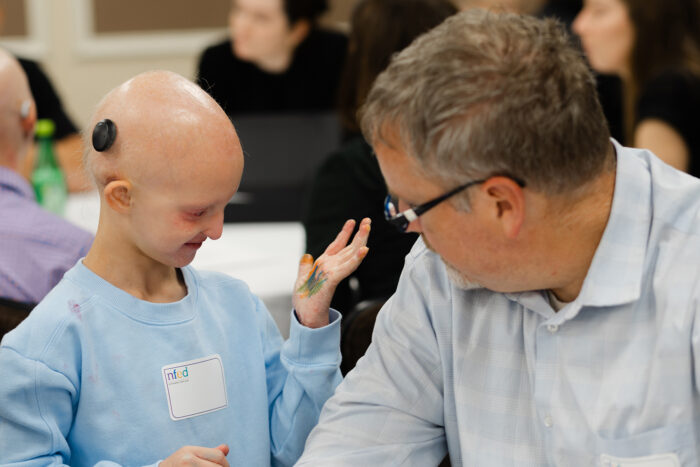
Lily talked with researchers. She made friends with medical students. She colored a stuffed bear with her new friends, other children just like her. The young girl also bravely gave a small skin sample for research.
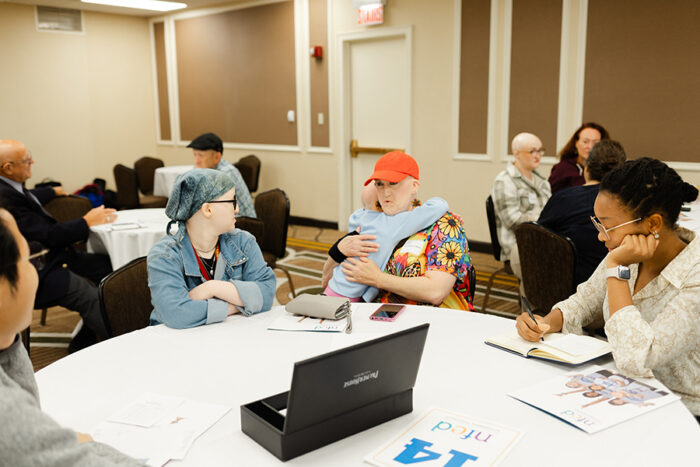
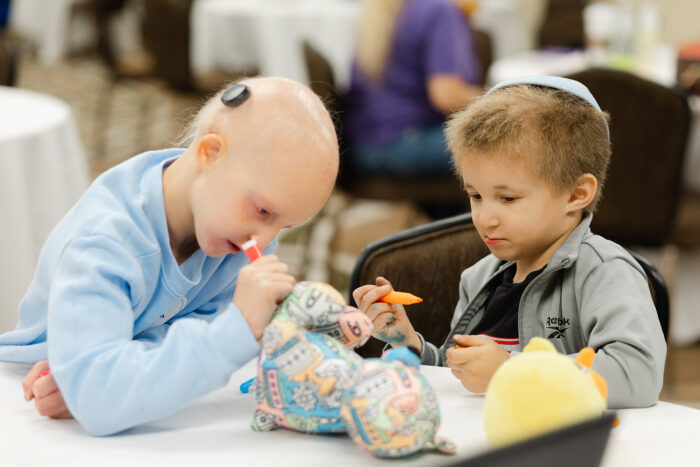
This may not sound like a typical research conference. But for the National Foundation for Ectodermal Dysplasias (NFED), it’s exactly what a research conference should be.
Why We Gathered
Lily and her mom, Alexus, joined us at the NFED’s Wound Healing Conference in Chicago, on Sept. 24-25. They were among the families, doctors, and researchers we brought together, some in person and some online.
This was the fourth international conference the NFED has led on wound healing in two conditions: ankyloblepharon-ectodermal defects-cleft lip and/or palate (AEC) syndrome and ectrodactyly-ectodermal dysplasia-clefting (EEC) syndrome. In both, the skin can break down and form painful wounds called skin erosions. Understanding and treating these wounds has been one of our top research priorities for 23 years.
We came to Chicago with two main goals:
- Reach a consensus on updated treatment guidelines for skin erosions.
- Establish a biobank, a collection of skin samples stored for current and future research.
The NFED developed the last treatment gudielines in 2006. It was time to revisit those guidelines, learn what new treatments have emerged, and bring the best minds back to the table, especially the families’.
Families Led the Way
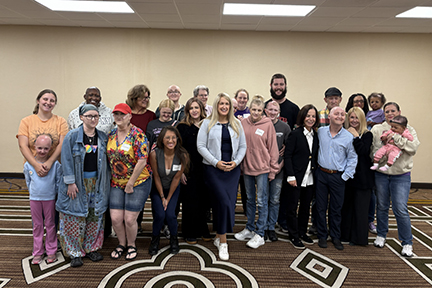
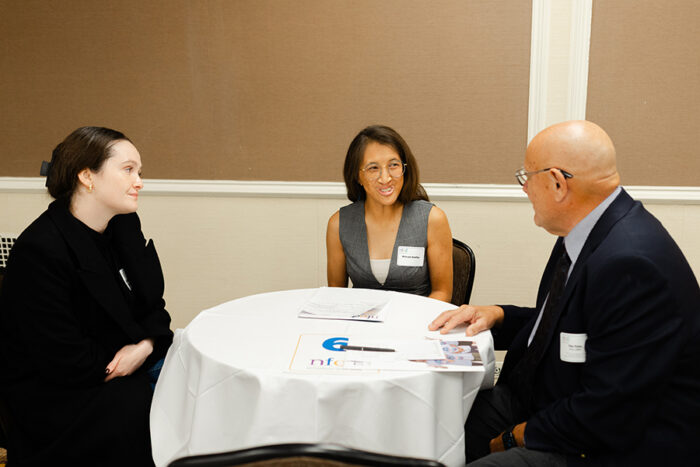
Twenty-two affected individuals and their families sat down with 23 professionals.
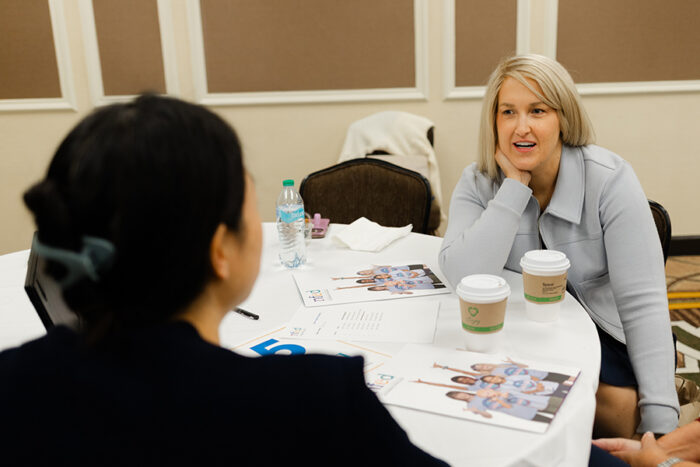
Each family took a seat at a table and told the experts what life is really like. They described how their skin erodes and what often triggers it. They talked about which treatments have worked and which have not. Some explained how their skin erosions have changed at different points in their lives.
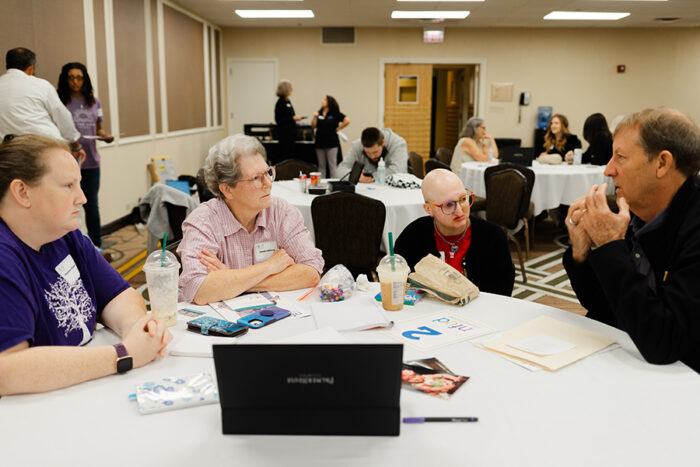
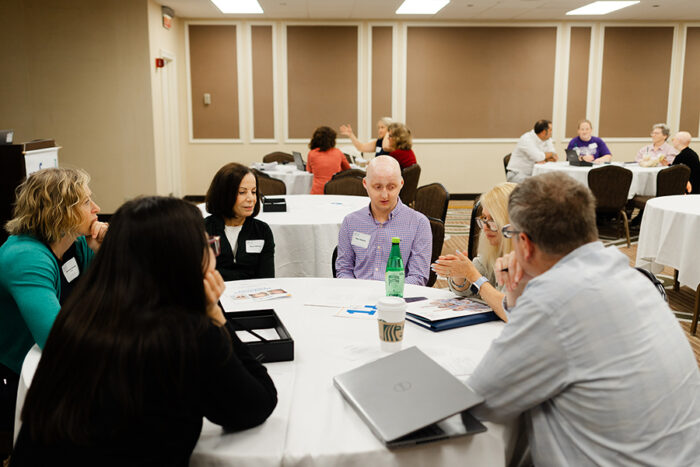
Some of the stories were difficult to hear. Moms like Ruth, Jennifer, and Shannon described how extensive the erosions were when their babies were born with AEC syndrome. They talked about painful dressing changes, the constant threat of infection, and the fear of the unknown. They talked about their babies crying during the dressing changes and the large amount of bleeding.
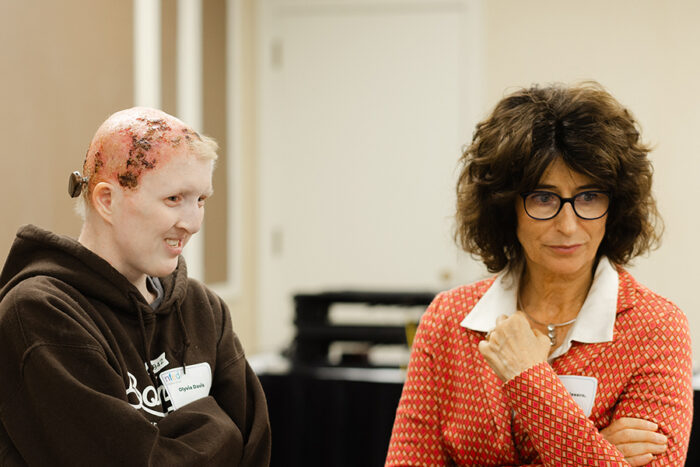
Olyvia, who has EEC syndrome, shared that her scalp broke down for the first time when she was a young adult. She is still searching for a treatment that works.
Families’ Commitment Over time
Many of the participating families have been on this research journey with us since the beginning. It was heartwarming to watch young adults who were just children at the 2003 and 2006 skin erosion conferences reconnect. They talked about their careers and their own children. Though their journey has been rocky with many bumps along the way, they are thriving. They have overcome unbelievable challenges to become the strong individuals they are today.
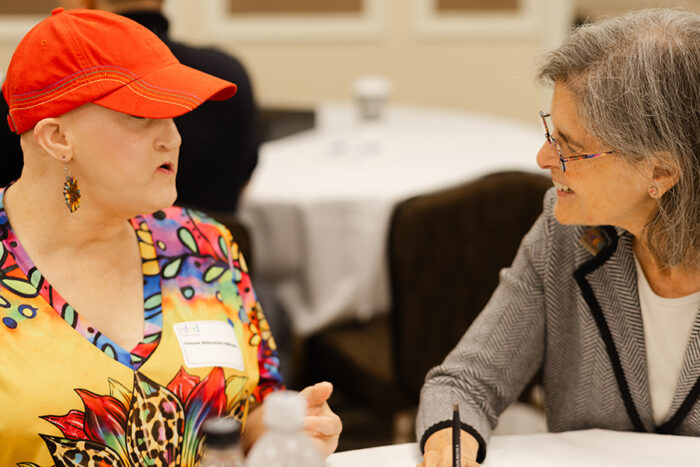
Mary Fete, our retired executive director and research specialist, applauded the families for driving this critical research. Many have attended numerous conferences and donated tissue samples more than once.
“The families drive our work,” Mary said. “I have worked with many of these individuals since they were babies and I am always humbled by their determination, their grit, and their courageous spirit! These individuals, the parents and families, are the true heroes in this story. They all have sheer determination to help find answers. To be overcome by their fears is simply not an option for them.”
“It was inspiring to see first hand their resilience, tenacity, and undying compassion,” Brian said. “Wound healing is dramatically more than a complex problem to be solved or a symptom that must be managed. It is the livelihood of our families that impacts every aspect of quality of life.”
Coming to A Consensus
After listening to the families, the doctors and researchers talked it through and agreed on new guidelines for treating skin erosions. We are currently working on the first draft. Once it is final, our team will submit it to a medical journal so care providers worldwide can use it.
More importantly, we will share it with our families when it’s published. Publishing takes time, but we hope to have it for AEC- and EEC-affected families in the coming year. Families need to be informed so that they can manage the necessary treatment with their providers.
A Generous Gift of Skin Samples

Seventeen people donated skin samples during the conference and we are incredibly grateful! Samples donated in the past have been critical to the progress we have made so far. We will store the newly donated samples in a new biobank at the University of Iowa and Northwestern University. Researchers can apply to the NFED to gain access to samples for their studies.
Giving Thanks

We thank our conference co-chairs for their leadership and time:
- Elaine C. Siegfried, M.D.
- Brad A. Amendt, Ph.D.
- Lamiaa Hamie, M.D.
- Michael Lewitt, M.D.
- Mary Fete, M.S.N., R.N., C.C.M.
- Brian Cook, Ph.D.
The NFED is grateful for our sponsors: Alice and Bruce Geismar, the Illinois Dermatology Institute and DeNova Research, and Nature MIRI, LLC. Without their donations, we could not do this important work.
Catalysts for Connection
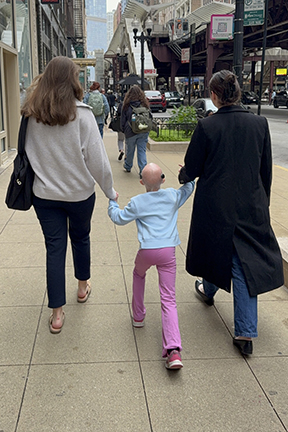
Executive Director, Greg Klimovitz, shared a moment he will not forget. He was walking from the round table talks to where skin samples were collected. Two research fellows were holding Lily’s hands. They laughed. They swung her up and down like old friends.
“This is the beauty of what we do at the NFED,” Greg said. “We are the catalysts of connection, joining the hands of medical and research experts and the people who need the fruits of their efforts the most. And as we join hands, we walk towards that future together.”
Greg also reflected on the families’ courage.
“Our mission at the NFED is to do whatever we can to enrich the lives and create brighter futures for all who are affected by ectodermal dysplasias,” he said. “It requires individuals affected by AEC and EEC to risk vulnerability and courageously participate. We thank all of them for helping us get closer to a treatment breakthrough.”
Have a question or comment? Contact us.