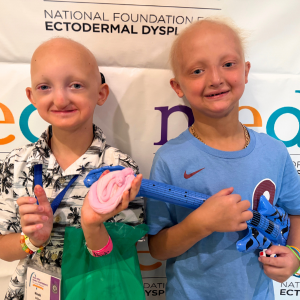
The late Mary Kaye Richter, founder of the National Foundation for Ectodermal Dysplasias, once wrote: “Getting families together that are affected by the same syndrome can be an invaluable experience for all involved. Having patients, clinicians and researchers working together is medicine at its best.”
She meant every word. That kind of medicine shows up every year at the NFED Family Conference, and this year marked 45 years of it.

In July in Chesterfield, Missouri, we welcomed 334 attendees from 35 states and three countries. One hundred thirty-two were first-time attendees. These are the highest conference numbers since the pandemic.
The 2026 Family Conference wrapped up 12 days ago, and I am still scrolling through photos and reflecting on the stories shared, as if they were collections taped into one of those photo albums from the 1980s. The kind that sat on coffee tables in living rooms and were flipped through every time the family was in town.
Yes. That is exactly what they are.
A Week to Remember

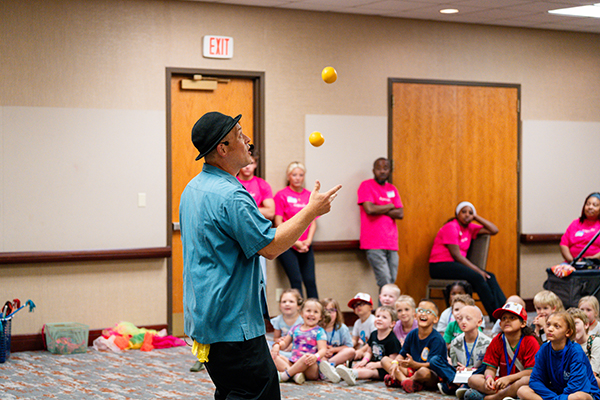
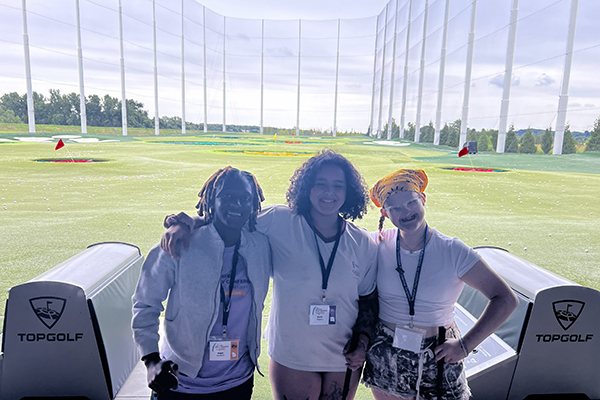
There were countless conversations, one-on-one dental evaluations, kids at the circus, a visit from the local zoo, teens on a field trip to Top Golf, laughter over meals, and warm embraces as people connected with someone who looked like them, or their child, for the first time.

Clinicians, researchers, and biopharma companies joined us to talk about breakthroughs that could brighten futures for those affected by ectodermal dysplasias, especially children.
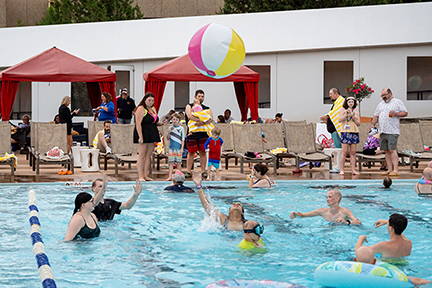

Every moment is worth filing away as a reminder: nobody travels the ectodermal dysplasia journey alone.
At Conference, it is sometimes hard to tell whose child belongs to whom, because people care for one another like family. And in a real sense, they are family, connected not by blood but by a rare kind of genetics. Nobody travels the ectodermal dysplasia journey alone.
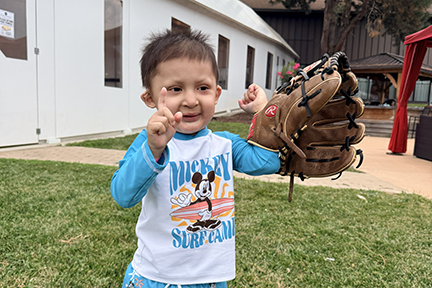
I listened to Jordan, a young adult affected by X-linked hypohidrotic ectodermal dysplasia (XLHED), tell parents that yes, their kids can play competitive sports, even without the ability to sweat normally. I had my baseball glove in my bag at the pool party, like always, and had a catch with a two-year-old while his mother talked about the relief she felt hearing from Jordan that a genetic diagnosis would not keep her son off the baseball field someday. Two other families listened in and realized they all lived within 20 minutes of each other back home in northwest Oregon.
An ‘80s Night for a 45th Anniversary
Our 45th Anniversary Celebration Dinner went full 1980s. Guests showed up in outfits most of us thought were long gone. Kids made slap bracelets and tried to solve Rubik’s Cubes while we recognized the people who have shaped our community: teenagers as Rising Stars, corporations as philanthropic partners, dentists who provide the best of care, and volunteers who have led fundraisers and served in leadership roles. It was a reminder of just how generous and far-reaching this community is. You can read more about the award winners in this blog.
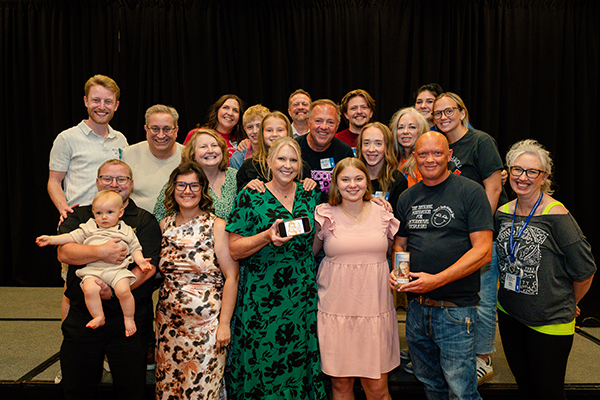
Members of Mary Kaye Richter’s family joined us, along with the family of her best friend and 30-year NFED employee, the late Beverly Meier, as the NFED community read a tribute to mark our history.
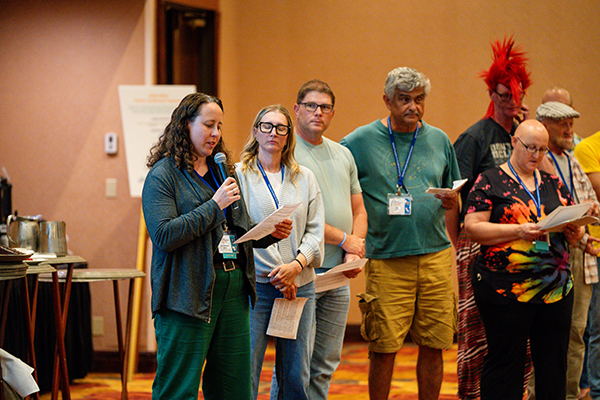
There was not a dry eye in the room. In a litany of love, a child shared what Kays’ Kids Camp means to him. Advocates talked about the power of telling their story on Capitol Hill. A mom cried happy tears describing how a clinical trial is opening the door for baby boys born with XLHED to one day potentially sweat normally.
I fought back my own tears during this reading, looking at the representatives of the Edelife Clinical Trial, one from the United States and one who traveled from France, both of whom were also welled up with emotion. This is why we do this work.
Seen and Understood
One of my favorite moments happened over lunch. I sat with a young couple, one affected by ectodermal dysplasia, one not. I asked her partner why she had made the trip to our annual Conference. She said, “I wanted to see and understand all of who she was.”
I looked over at Dr. Patricia Marik, a pediatric psychologist sitting next to me, and she was speechless. So was I. That is the heart of why we offer so many workshops and general sessions: so people affected by ectodermal dysplasias can be seen and understood.
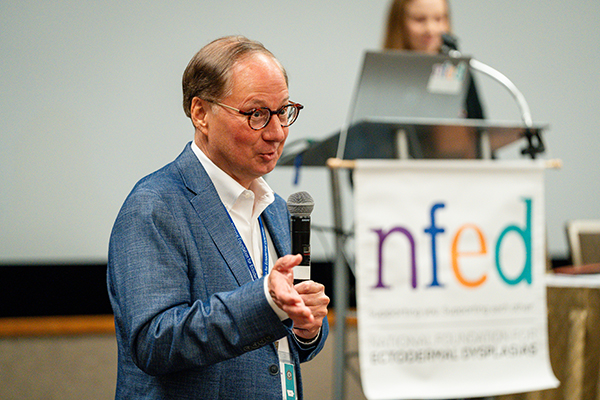

I am grateful to every presenter who made that possible this year, from Dr. Clark Stanford who addressed dental concerns and Dr. Kathy Grange who explained genetics and how the conditions are inherited. Dr. Elaine Siegfried talked about skin, hair and nails issues and how to best treat them while Dr. Clayton Butcher specifically addressed issues affected adults face.
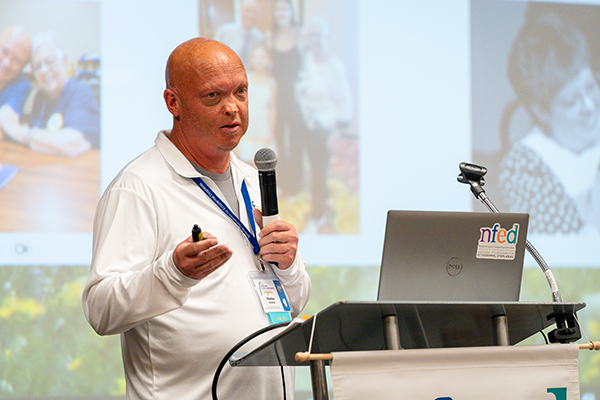
The young adults enjoyed the special programming for them, which was led by Cameron Olsen and Soren Roe. And then there was Charley Richter, who stepped into the role his mother, Mary Kaye, had for 30 years, serving as master of ceremonies. His warmth and humor made everyone feel welcomed and seen.
There is not enough space to capture everything that happened at this year’s Conference. You will just have to join us next year, or check out the recap video in the meantime.
Art-vocacy and the Helping Club

The best part of Conference is watching people find their voice through storytelling. Alongside workshops on legislative, school, and insurance advocacy, we launched our first-ever Art-vocacy program. More than 20 submissions, from children and adults alike, ranged from crocheted zebras to painted, repurposed windows. Each piece gave voice to a rare story of resilience, and many of the artists were kids who do not always get to be in the spotlight.
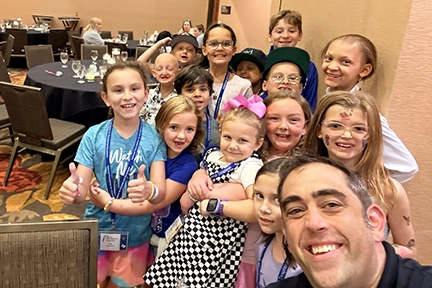
Maybe that is why some of those same kids were running around the dining area before the pool party. I later learned they had formed their own “Helping Club.” They served desserts and refilled water glasses without being asked and without expecting anything in return. When someone handed them a dollar as thanks, they ran straight to me and called it a donation, to help NFED help kids like them: children affected by rare syndromes, and the siblings who love this community just as much.
Growing Need, Growing Community

2026 not only brought the highest interest in the Family Conference since the pandemic, it also brought a 20 percent increase in requests for financial assistance to attend. More families wanted to come, and more needed help to get there. Thanks to our sponsors, we made it possible for all of them to join us. They would fit right in as honorary members of the Helping Club.
We especially thank our Legacy sponsors, the Vora family, the Louis J. and June E. Kay Foundation, and Toregem and sustaining sponsor, Pierre Fabre.
The Miracle of Joy
At our closing session, I shared that 20 years ago, a local Chesterfield, Missouri, publisher commissioned Maya Angelou to write a poem for the 2008 Beijing Olympics. In it, she wrote of the “miracle of joy that comes out of the gathering of our best, bringing their best.”
That is exactly what happened in Chesterfield, Missouri, at the 2026 NFED Family Conference. It was, indeed, the best kind of medicine.

May this extra dose of community, connection, and joy carry you through until we gather again on July 15-17, 2027 in Baltimore, Maryland.
And when you need an extra boost of hope and courage, pull out those photos and notes as a reminder: you’ve got this. Your NFED family is with you.
Read about the incredible volunteers who made this year’s Family Conference extraordinary!
Have a question or comment? Contact us.