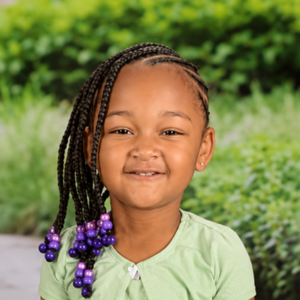
Mia’s smile is more than a beautiful picture. It gives her confidence, joy, and the chance to feel like every other little girl when she looks in the mirror.
Her dad, Otis, knows how important that can be because he grew up with ectodermal dysplasia, too. He wanted four-year-old Mia to have a smile to be proud of. The NFED was honored to help make that possible.
Through our Dental Treatment Center and Treatment Assistance Program, the NFED helped Mia get the denture she needed. The process wasn’t always easy. But, the moment she saw her new smile in the mirror made every step worth it.
We recently talked with her dad, Otis, about Mia’s first denture adventure.

Mia’s Story
NFED: How did you learn that your daughter may have ectodermal dysplasia?
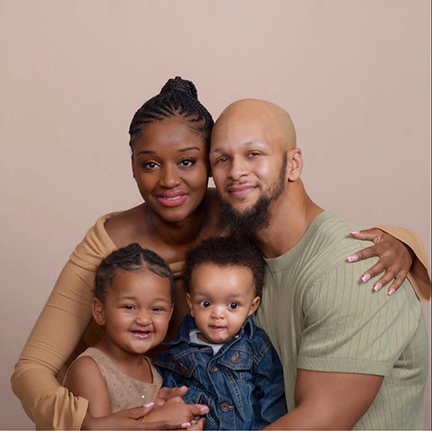
Otis: I have a form of ectodermal dysplasia. I have it in my family – my father and my aunt have it. So, we were anticipating that she may have it. As soon as she was born, she had weak nails like mine. It took her a while to grow teeth, and when she did, she only had just a few. Our three-year-old son, Leo, also has ectodermal dysplasia and has four upper teeth but no bottom teeth.
NFED: Do you have dental issues, too?
Otis: Yes. Luckily, I had a specialist in Pittsburgh who specialized in cases like mine, and was able to get a fitting at three years old, and I’ve worn dentures ever since.
NFED: How many teeth does Mia have of her own before she got dentures?
Otis: She has a total of about four or five up top, and then on the bottom, she has two or three, so a total of about eight or nine teeth.
NFED: Why did you and your wife, Jade, want dentures for Mia?
Otis: We wanted her to have dentures to have a nice smile when she is taking pictures. And we didn’t want her to face being picked on for not having a full set of teeth like the other kids, and for her to grow up with a low self-esteem, cause I had to go through that. My first pair, my teeth weren’t very long and I had to force myself to open up my smile for people to see my teeth. I was picked on and I don’t want her to go through the same thing.
NFED: After you found Georgia Prosthodontics through the NFED, what was the dental process like? (They are an NFED Dental Treatment Center.)
Otis: We called and got an appointment. First, they did an evaluation of her mouth using different tools. They made a mold of her mouth. And then they used some new technology where they were able to do a 3D scan of her mouth. She was able to see on a big TV right in front of her how her mouth looked. Then, they did an x-ray to see how many teeth she had, and what the strength of her teeth was. They sent those results to the lab, and we had to come back to get a fitting (for an upper denture).
NFED: How did Mia handle the visits?
Otis: The first process was her trying [her denture] in for a few minutes, trying to talk with them in her mouth, getting used to them being in her mouth, and then taking them out.
At first, they were pretty loose, but the dentist said that would happen, and that her gums would just start to grow into it. We tried putting adhesive in there. The first time, I put a little too much, and she didn’t like the way it tasted in her mouth, so we did without it. We’d have her practice at home trying them in. She’s gotten a lot better at talking with them, and she was able to take her pre-K pictures with them in. We definitely have made great strides with them.
NFED: How did Mia’s denture improve her speech?
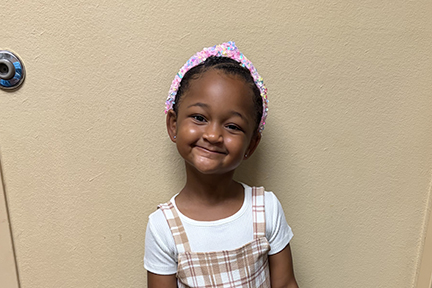
Otis: She’s very articulate, when she speaks, surprisingly. With the teeth in her mouth, she initially had the S’s that she had to work out with her tongue matching the new set of teeth in her mouth. It was an adjustment. How do we get her to improve on that? It’s like slowly saying words, and repeatedly having her improve on how to say it. We kept the routine going with her wearing them and talking.
NFED: How did having a dad with dentures help Mia adjust to her own, especially being so little?
Otis: I’d take mine out in front of her and show her daddy’s got them, and, this is going to help you have a nice smile. That reassured her that she’s got someone that’s along the same journey as her, that’s been through it. That gave her some reassurance, knowing that she’s not an outcast.
NFED: For other parents who are going down this road, do you have any little tips or tricks you got to help Mia keep them in her mouth?
Otis: Well, at first, it was a bit of a challenge, because we had to fit it just right and align it before we put them in. It was a challenge, because it would hurt. And we had to make adjustments to make sure that they fit. But, after you fit them in right, it’s just a matter of her keeping them in and having her practice pushing them up. That’s the thing that dentists emphasize – let’s not be the ones that put them in, let’s have her do it in case they do fall out, she’ll know how they need to fit when she puts them in her mouth, and not have to rely on an adult to do it for her.
NFED: How does she feel about having a denture?
Otis: She was very excited to get them. She anticipated that it was going to make her happy having them in. When that moment finally came, she was just really excited to just have that smile. She would just go in the mirror, look at herself, and smile.
NFED: What is it like knowing the NFED is walking alongside you to get Mia the dentures she needs?
Otis: We absolutely appreciate all that you have done to help fund the whole process of her getting teeth. It’s definitely life-changing for her. We greatly appreciate you guys, because it was a very expensive procedure. We did have to come out of pocket a little bit, but without your help, I don’t think we wouldn’t have been able to afford it. She would have had to wait.
NFED. If we had a new family, and they’ve got this little person who doesn’t have many teeth, and they’re trying to decide whether or not to get them dentures, as somebody who’s affected, as well as the dad of a little one, what would you want to say to them about whether or not they should get them dentures?
Otis: If they were affected, I would say do their best to get them done as early as possible. Just go ahead with the procedure. Because in the end, it’s going to be worth the challenges you have to go through as a kid without them – number one being your confidence, your sense of self-esteem growing up and being around other kids. They don’t understand your condition, and they’re not going to be able to relate. You’re going to feel like an outcast at times without them. When I did have my teeth in, I felt more confident, and also smiling for my pictures, or just in general. When I’m smiling I won’t get picked on. It was a really big deal for me, growing up.
For parents that don’t have that condition, but their kids do, do your best to be their best advocate and go ahead with the procedure, because it’s going to affect them in the long run.
Helping You With Your Dental Care
If you are looking for a care provider, consider an NFED Dental Treatment Center. You can also apply to our Treatment Assistance Program. We’re accepting applications through October 1 or until our funds are depleted for the year. To access both of these programs, you must register with the NFED.
Resources
- He’s Too Young For Dentures!
- Things to Know When Your Child Needs Dentures
- Dentures for Kids
- 15 Ways to Help Your Child Get Ready for Dental Visits and Dentures
Have a question or comment? Contact us.
Would you like to share your story with our NFED community?