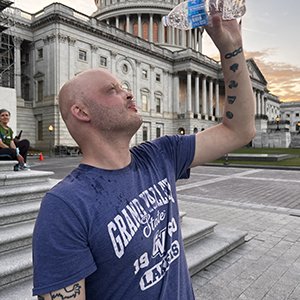
Most of us have sweated through a hot summer day at some point. Our bodies handle it without much thought. We sweat, the sweat evaporates, and we cool down. But what if your body couldn’t do that at all?
That’s the reality for many people affected by ectodermal dysplasias. And it’s a question a lot of parents ask us, especially those raising babies and toddlers who can’t yet tell them how they feel: What does overheating actually feel like when you can’t sweat?
It’s a fair question, and an important one. Parents of nonverbal children want to catch the warning signs before things get serious. And for good reason. Without sweat glands, the body can overheat much faster than most of us realize.
A Hallmark Feature of Ectodermal Dysplasias
The inability to sweat is called hypohidrosis. It’s one of the hallmark features found in many of the 50 types of ectodermal dysplasias. People with hypohidrosis have fewer sweat glands than most. And, the glands they do have may not work the way they should – if they work at all.
We wanted real answers, so we turned to the people who know best: individuals living with different types of ectodermal dysplasias. We asked them to describe, in their own words, what it feels like when they get too hot.
Everyone’s experience is a little different. Some describe a headache. Others notice their face flushing, or their energy draining fast. Hearing these different stories helps the rest of us understand, and respond with more compassion, when someone we love starts to overheat.
Start the Conversation With Your Child
If your child is old enough to talk, the video above can be a great conversation starter. Watch it together, then ask them what they notice as they start to feel warm, and what it feels like once they’re really overheated. Learning more about their inability to sweat together can help them put words to what they’re feeling, and figure out what helps them cool down fastest.
This Conversation Matters at Every Age
This isn’t just a topic for parents of babies and toddlers. Teens and adults with ectodermal dysplasias deal with overheating, too, at school, at work, during sports, even just running errands on a hot day. And the truth is, we can’t assume that everyone experiences heat in the same way.
That’s part of why hearing others put their experience into words matters so much. When someone describes their own warning signs — a headache before the flush, a certain kind of tiredness, a change in how their skin feels — it gives others a vocabulary for something that’s hard to explain. It can also be the first time someone realizes their experience isn’t “normal” for most people, and that there’s nothing wrong with needing to plan around it.
For older kids and adults, that self-awareness is often the difference between catching overheating early and pushing through it until it becomes a real problem. Talking about it openly with family, friends, teachers or coworkers also makes it easier to ask for what you need, whether that’s a cooling break, access to shade, or just a little understanding.
Prevention Is the Best Treatment
When it comes to overheating, prevention beats treatment every time. Many adults and older kids in our community have learned, through years of experience, how to spot the early signs and cool down before things get worse. A lot of them shared their go-to tricks in our article, 15 Ways to Stay Cool.
But if your child is too young to speak up, you’ll need to watch for the signs yourself.
Know the Signs of Overheating
As body temperature climbs, skin may turn dry and hot to the touch. It might look flushed, or in some cases, unusually pale. Red ears are another common early clue. From there, a child may become fussy, tired, or unusually quiet.
Catching these signs early can make all the difference. Our library article on sweat glands and ectodermal dysplasias walks through the full list of warning signs, so you know exactly what to look for.
A Treatment on the Horizon
The challenges of overheating is why the Edelife Clinical Trial matters so much to our community. The trial is testing a treatment given before birth for x-linked hypohidrotic ectodermal dysplasia (XLHED), the most common type of ectodermal dysplasia. The goal is to help sweat glands develop normally while a baby is still in the womb. In an earlier study, boys who received the treatment before birth went on to sweat normally and showed other improvements, too. If sweat glands can form and work the way they’re supposed to, future generations may never have to face the overheating risks we’ve talked about here in the first place. That’s why so many families are watching this research closely, and why the trial is still looking for more participants.
Learn More About XLHED Treatment
Every person’s experience with hypohidrosis is different. But the more we talk about it, and the more we listen to each other, the safer and more understood our whole NFED community becomes.