By Anonymous*
“Smile!” — then comes the snap of a camera.
That one simple word, meant to spark joy, often filled me with anxiety and insecurity. For most people, smiling is effortless. For me, it was a reminder of what I lacked — not just teeth, but normalcy, confidence, and the freedom to eat, laugh, and speak without fear or shame.
Growing Up with Ectodermal Dysplasias
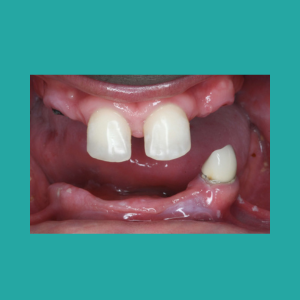
I was born with ectodermal dysplasia, a rare genetic condition that affects the development of hair, nails, sweat glands, and teeth. My condition stems from a genetic mutation in the TSPEAR gene, which is linked to forms of ectodermal dysplasia that affect dental development. I grew up with just five small teeth in my entire mouth. A condition like mine doesn’t just affect the person who has it; it ripples outward. My mother, aunts, and uncles all shared the emotional and financial burden of my reality. My mother, — a strong, relentless woman, — bore the brunt of it.
We began our journey in Cameroon, a West African country with limited medical infrastructure and even fewer solutions for someone like me. Children would tease me for my smile. I’d watch them eat roasted corn and other street food on the way to school, foods I couldn’t even attempt to enjoy.
One memory is seared into my mind: my uncle had bought roasted corn for everyone. I tried to eat some with the few teeth I had. Noticing my struggle, he chewed the corn for me and fed it to me, like a mother bird. He became my teeth for that moment, so I wouldn’t feel left out.
But it was just that — a moment.
A New Life in the United States
My mother, determined to find a lasting solution, immigrated to the U.S. and filed for me to join her. As a young boy, I boarded a plane to America, in search of a better life.
Our first glimpse of hope came around 2004 at the Medical College of Georgia, where a specialist fitted me with my first set of dentures. For the first time, I could eat with my classmates. I no longer needed “special lunches.” I began to feel like a normal 10-year-old.
That sense of normalcy came at a cost. We traveled hours for each visit. My mother, raising five children, worked tirelessly to afford my care — taking time off work, skipping other essentials, and doing whatever it took.
The Road to Dental Implants
Eventually, our dentist opened a practice closer to home. I remained under his care through high school and college. But as I entered adulthood, the conversation shifted: removable dentures wouldn’t last forever. The only permanent solution? Full-mouth dental implants.
My dentist explained I’d need to stop growing before moving forward. By my early 20s, I was finally ready. But with the green light came a new obstacle: cost.
The estimate? Nearly $100,000.
As a recent college graduate already juggling student loans, that number crushed me. The only thing heavier than the cost was the reality that insurance wouldn’t cover it. Not because it wasn’t medically necessary — it was. I couldn’t chew properly. My gums were chronically inflamed. My condition was documented and genetic. But my insurance didn’t see it that way.
Finding the NFED and Fighting Back with Insurance


I found the National Foundation for Ectodermal Dysplasias (NFED), one of the few trusted organizations supporting people like me. They offered a $2,000 grant, just 2% of what I needed. I needed to get my medical expenses to a more manageable level.
So I followed their playbook:
- Got a genetic test confirming my condition
- Secured a referral from my primary care physician
- Collected letters of medical necessity, 3D scans, and supporting documents from surgeons
Even with all of that, Aetna only offered $4,000. I was still over $80,000 short.
I had one insurance provider at work. No options. So I lobbied my CEO and human resources team, and successfully got our company to switch to United Healthcare PPO. My monthly premium jumped to nearly $700, but it gave me a fighting chance.
For six months, we fought. We filed appeals, pushed for out-of-network exceptions, and submitted clinical letters. It felt like a high-stakes volleyball match.
Finally, with support from Dr. Neugarten’s office, I received an in-network exception.
My out-of-pocket cost dropped to $18,000, then $16,000 after NFED assistance. Still life-changing money, but manageable. I finally had the surgery.
A Victory But Ongoing Challenges
But the battle isn’t over. Insurance has delayed claims, withheld payments from providers, and prolonged the process. I’m still fighting to make sure the burden doesn’t fall back on me — after doing everything right.
My story is not rare. What’s rare is that I had the resources, employer support, and persistence to navigate this broken system.
A Call for Legislative Change
No one should have to lobby their CEO or pay thousands out-of-pocket just to chew, smile, and eat like everyone else.
We need legislation that:
- Requires insurance to cover medically necessary dental treatment for congenital conditions like ectodermal dysplasia;
- Recognizes that teeth are not cosmetic — they are essential for nutrition, communication, and quality of life; and
- Protects families from being buried in bureaucracy, denials, and debt.
When someone tells you to smile, it should bring joy — not shame.
I’ve spent my entire life fighting for something most people take for granted. Now I’m asking our federal legislators: Stand with patients like me. Make medically necessary dental care a right, not a privilege.
- This blog was written by an adult affected by ectodermal dysplasia who chooses to remain anonymous.
The NFED is working to pass federal legislation in the United States that would guarantee the payment of health insurance benefits for necessary medical care and treatment due to congenital anomalies that primarily impacts the appearance or function of the eyes, ears, teeth, mouth, or jaw. Learn more about the Ensuring Lasting Smiles Act (ELSA) and how you can take action.
Share Your Story
Have a question or comment? Contact us.